
Clothes Chewing in School-Age Kids
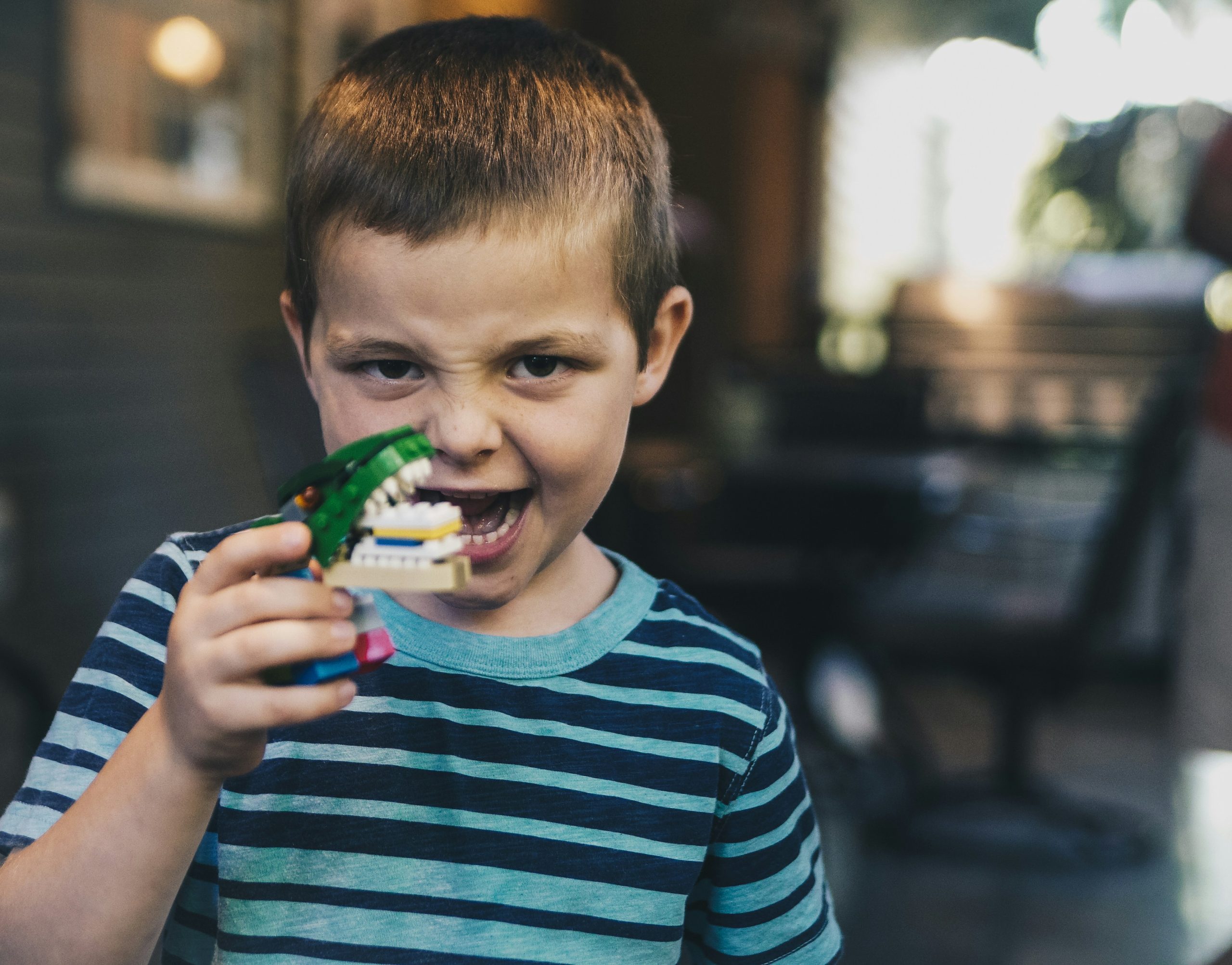
A child chewing clothes may be using the behavior for comfort, oral input, concentration, or relief from mouth discomfort. The behavior alone does not reveal the cause, so the safest first steps are to check for pain or swallowed fabric, observe when chewing happens, and offer a low-risk alternative without shame.
Changing teeth or starting a new school routine may be relevant context, but neither proves why a child is chewing. This guide helps caregivers sort through the clues, choose a practical first response, and decide when dental, medical, or occupational therapy support may be appropriate.
What to check first
- Check for mouth pain, injury, damaged teeth, and missing fabric.
- Track the situations in which chewing starts and what happens afterward.
- Replace the behavior with a safer option instead of using punishment.
- Seek qualified help when chewing involves pain, ingestion, injury, choking risk, or problems with daily participation.
Why a School-Age Child May Be Chewing Clothes
Clothing chewing can serve different functions at different times. A damp collar during homework may have a different explanation from sudden chewing that begins with a painful tooth.
The useful question is not, “What label explains this?” It is, “What tends to happen before, during, and after the chewing?”
Oral input, settling, and concentration
Pediatric occupational therapy guidance describes chewing nonfood objects as one possible form of oral sensory seeking. Some children may chew when they are overwhelmed, under-stimulated, restless, or trying to concentrate. This is a clinical hypothesis, not proof of a sensory disorder or a reason to begin a sensory treatment plan without assessment. Humber Sensory Processing Service and the American Occupational Therapy Association both support an assessment-first approach.
Timing can make the hypothesis more useful. Chewing that clusters around quiet work, waiting, noisy rooms, transitions, or fatigue may point toward a need for a different kind of support in that setting.
Habit and self-comfort
Some repetitive childhood habits happen partly outside a child’s awareness and may help with settling or tension. The American Academy of Pediatrics discusses this pattern for habits such as nail biting and thumb sucking, not clothing chewing specifically. That makes the comparison useful but indirect. AAP guidance on common childhood habits also notes that these habits may rise and fall over time.
A school change, boredom, hunger, excitement, or concentration may coincide with chewing. None should be treated as the cause until a pattern appears across repeated observations.
Mouth or dental discomfort
Children commonly begin losing their front baby teeth at about age six. Permanent teeth replace them during the mixed-dentition years, although timing varies. AAP guidance and current American Academy of Pediatric Dentistry guidance support this general developmental timing.
Loose teeth, toothache, gum soreness, or another mouth problem may contribute to chewing. A child who is losing teeth may also chew for an unrelated reason, so timing is not enough to establish causation.
What the behavior cannot establish
A child chewing clothes is not, by itself, evidence of autism, ADHD, anxiety, pica, or a sensory processing disorder. Diagnosis requires a broader history and qualified assessment.
Chewing fabric is also different from eating it. Pica refers to eating nonfood items. Repeatedly swallowing fabric or finding missing pieces changes the safety concern and calls for pediatric guidance. NHS pica guidance describes possible complications of ingestion, including choking, intestinal blockage, poisoning, infection, constipation, dental problems, and nutritional concerns.
First Rule Out Pain, Injury, and Swallowed Fabric
Health and safety checks come before behavior-change strategies.
Check the mouth and clothing
Caregivers can look for visible or reported signs without trying to perform a dental examination:
- Tooth or gum pain
- Swelling or bleeding
- Sores on the lips, chin, or inside the mouth
- A cracked, worn, or otherwise damaged tooth
- Frayed fabric or pieces missing from a collar or sleeve
- A sudden change in chewing force or frequency
A single neutral question about soreness is more useful than repeated questioning. Persistent toothache, swelling, bleeding, visible damage, or chewing that began with mouth symptoms is a reason to contact a dentist.
Caregivers should not pull, manipulate, or repeatedly test a loose tooth. A dentist can assess whether discomfort or damage is related to the developing dentition.
Separate chewing from ingestion
Chewing or mouthing fabric without swallowing it is not automatically pica. If fabric is swallowed, regularly goes missing, or appears in stool, a pediatrician should help assess the behavior and any health risks.
Pica can be associated with iron deficiency, but clothing chewing alone does not show that a child has low iron. The AAP lists pica among possible signs of iron deficiency and anemia. Testing and supplements should remain clinician-directed because pica has several possible medical, nutritional, and developmental associations. AAP guidance on iron deficiency and anemia.
Call emergency services for active choking, severe trouble breathing, or another life-threatening emergency. Difficulty swallowing, persistent gagging or vomiting, chest or abdominal pain, or other acute symptoms after swallowing material require urgent medical guidance. AAP foreign-object guidance provides symptom-based routing.
Avoid unsafe shortcuts
Mixed dentition is not the same as infant teething. Benzocaine or lidocaine products, homeopathic teething products, and teething jewelry are not appropriate shortcuts for unexplained clothing chewing. The US Food and Drug Administration warns that topical teething medicines can cause serious harm and that teething jewelry has caused choking and strangulation injuries. The FDA also lists a safety communication covering jewelry marketed for sensory stimulation on its pediatric medical devices page.
Persistent discomfort needs dental advice rather than an improvised numbing or oral appliance solution.
Track the Pattern Before Trying to Stop It
A short pattern log can replace guessing with observable information. It is an observation tool, not a diagnostic test.
Record several representative days across home and school when possible:
- Time and place
- Activity immediately before and during chewing
- Part of the clothing being chewed
- Whether the fabric was damaged or swallowed
- Observable context, such as quiet work, movement, waiting, fatigue, hunger, conflict, excitement, or noise
- Any reported mouth pain or loose-tooth concern
- Adult or peer response
- What happened immediately afterward
- Whether an alternative was offered and accepted
A simple tally plus one context note may be enough when a detailed log is burdensome. Constant surveillance can draw more attention to the behavior and increase self-consciousness.
Involve the child without demanding an explanation
Early elementary children may not know why a behavior happens. Not knowing can be an accurate response, especially when the behavior starts outside awareness or the child lacks words for an internal sensation.
A brief, non-leading check can focus on concrete information:
- Whether anything in the mouth hurts
- Whether chewing happens before the child notices it
- Whether water, movement, or a hand-based activity feels helpful
- Whether a private signal would be less embarrassing than a spoken reminder
Children with limited language may respond more easily to pictures, pointing, or two simple choices. Self-monitoring is useful only when it does not create shame, anxiety, or fixation.
Respond Without Shame or a Power Struggle
The immediate response can follow a simple sequence: notice, check safety, cue briefly, offer an alternative, and move on.
Use one calm, private cue
Caregivers can agree on a short cue that describes the boundary without labeling the child. Sample wording might be: “Clothing stays out of the mouth. Water or the hand tool?”
The cue should be quiet and consistent. Lectures, public correction, teasing, threats, and punishment can increase conflict and embarrassment. AAP habit guidance says punishment is not an effective way to eliminate self-comforting habits, although the source discusses other habits rather than clothing chewing specifically.
When chewing is safe and a need has already been addressed, reducing repeated attention may prevent the response from becoming the main event. This does not mean ignoring pain, ingestion, skin injury, damaged clothing, or distress.
Reinforce the replacement
Positive reinforcement works best when it names a specific action. Useful targets include:
- Using an agreed alternative
- Responding to a private cue
- Reporting mouth pain
- Keeping fabric intact during one defined activity
- Asking for a movement break
Praise and brief acknowledgment are low-cost starting points. A simple visual chart can suit some early elementary children when the goal is short, observable, and attainable. Earned rewards should not be removed for later lapses, and the chart should not be displayed in a way that humiliates the child. AAP school-age reinforcement guidance supports specific positive goals and cautions against demerits.
If a chart creates conflict or self-consciousness, brief acknowledgment and easier access to the alternative are better options.
Keep the adult response consistent
Caregivers and school staff need only a small shared plan:
- One cue
- One or two approved alternatives
- The same threshold for checking pain or ingestion
- A simple way to record useful patterns
Consistency does not require constant monitoring. The aim is to make the response predictable while preserving the child’s dignity.
Choose Safer Alternatives Based on the Pattern
No replacement has been proved to stop clothing chewing for every school-age child. The best starting point is a low-risk option matched to the situation, followed by observation of whether it actually helps.
Start with no-purchase options
Possible trials include:
- A water bottle during the activity, when school rules permit
- A quiet hand fidget during seated work
- A brief movement or carrying task before a predictable chewing period
- A short break during long waiting or concentration demands
- A washable clothing protector or extra layer that keeps the main shirt dry, but only when the child is not damaging or swallowing that fabric
These are practical trials, not established treatments for clothing chewing. The option should not disrupt learning or create a larger problem. It should also fit the child’s motor abilities, sensory preferences, disability-related needs, and school access.
Change one variable at a time. If chewing decreases only when movement happens before desk work, that is more useful information than introducing several tools at once.
Use food-based options cautiously
A familiar crunchy or chewy food may fit an existing meal or snack time when the child already manages that texture safely. Allergies, feeding skills, dental advice, nutrition needs, choking risk, and school rules may make a food option unsuitable.
Continuous snacking, hard candy, sour sprays, ice chewing, and gum should not be default solutions. Water, movement, or a hand-based activity is usually a simpler first trial.
Treat chew tools as products with safety questions
Direct evidence that a chew product reduces clothing chewing in otherwise healthy children ages 5 to 8 has not been established. A 2025 systematic review of 21 sensory-based intervention studies included participants ages 0 to 21 with sensory processing challenges and found that outcomes depended on the intervention and target. It did not study clothing chewing or prove the effectiveness of chew tools. See Piller and colleagues, PubMed PMID 41321460.
If a family considers a purpose-made, non-wearable chew item, the review should cover:
- Manufacturer age labeling and instructions
- Size, construction, and detachable parts
- Fit with the child’s chewing force and developmental ability
- Cleaning and storage
- Frequent inspection for cracks, tears, or shedding
- Direct supervision
- School rules
- Dental or occupational therapy input when use is frequent or forceful
Use should stop if the item breaks down, sheds pieces, causes pain, affects breathing, or is used outside its instructions. A product label or marketing claim does not establish therapeutic benefit.
Wearable chewing necklaces, bracelets, amber jewelry, and other items around the neck or wrist are not recommended. FDA safety information warns against necklaces, bracelets, and other jewelry marketed for teething or sensory stimulation because of choking and strangulation risks.
Build a Discreet School Plan
A school plan should focus on observable behavior and participation, not a presumed diagnosis.
Parents can ask whether chewing appears during certain tasks, transitions, noise levels, waiting periods, or times of day. A teacher may use the same private cue and keep an approved alternative within discreet reach.
A brief note can cover:
- What staff should observe
- The agreed private cue
- Approved alternatives
- Signs of pain, damage, or ingestion that require parent contact
- A limited period for collecting observations
- How the family and school will review the result
Avoid public reminders, peer explanations, punishment, and loss of recess. These responses do not test what may be prompting the chewing and may expose the child to unnecessary peer attention. Only information necessary to support the child should be shared.
A formal plan may be unnecessary if chewing does not happen at school or does not affect safety, learning, peer relationships, or clothing. When it does interfere, the school nurse, counselor, special education team, or occupational therapist may help according to local procedures.
Evidence for school sensory supports is varied. A 2024 rapid review by Unwin and colleagues examined 61 articles involving students with sensory processing challenges. Only 15 percent were rated as good evidence, and no support was recommended without caveats. The review was not about clothing chewing, so it supports individualized assessment and monitoring rather than a universal classroom tool. See the American Journal of Occupational Therapy rapid review.
Review Progress and Change Course When Needed
Realistic progress may look like:
- Less fabric damage
- No swallowed material
- Lower frequency or force in one target setting
- Independent use of a safer alternative
- Better participation in class or routines
- Earlier reporting of mouth discomfort
A practical trial starts with a rough baseline, changes one low-risk factor, and reviews the same measures after a short planned interval. The interval is a monitoring choice, not a validated treatment schedule.
Complete and rapid cessation is not the only useful result. Fluctuation does not automatically mean failure.
Change course when a strategy adds distress, disrupts learning, causes a new safety problem, or shows no meaningful benefit. A useful replacement should reduce risk without becoming harder for the child or family to manage. New pain, stronger chewing, ingestion, skin or tooth damage, or growing interference at school or home is a reason to seek professional guidance.
When Professional Help Is Appropriate
Different concerns call for different professionals.
Contact a dentist
Dental guidance is appropriate for toothache, gum pain, swelling, bleeding, cracked or worn teeth, mouth sores, or chewing that appears linked to loose or erupting teeth.
A dentist can assess discomfort and whether chewing is affecting the developing dentition. Mouthguards and other oral appliances should not be improvised without dental evaluation.
Contact a pediatrician
Pediatric guidance is appropriate when fabric is swallowed or regularly goes missing. It also fits a new and persistent behavior accompanied by fatigue, pallor, eating changes, abdominal symptoms, or other health concerns.
A pediatrician can assess whether pica, nutrition, development, anxiety, or another concern needs further evaluation. General information about pica or iron deficiency should not lead to home testing, supplements, or a diagnosis.
Consider an occupational therapy assessment
An occupational therapist may help when chewing occurs alongside broader concerns with sensory input, feeding, oral-motor skills, self-care, classroom participation, or daily routines.
The American Occupational Therapy Association advises against providing sensory-based interventions without documented assessment of sensory-processing difficulties. Current reviews also show that results vary by intervention, population, and outcome. The goal of an assessment is better participation and an individualized plan, not a label or a generic sensory routine.
Referral routes vary. A pediatrician, school team, health plan, or local service may determine access.
Seek urgent help
Call local emergency services for active choking, severe trouble breathing, severe oral injury, or another life-threatening emergency.
Urgent medical guidance is also appropriate after swallowed material causes difficulty swallowing, persistent gagging or vomiting, chest or abdominal pain, or other acute symptoms. A suspected toxic exposure should be directed to the local poison center or emergency service.
Frequently Asked Questions (FAQs)
Sources
- American Academy of Pediatrics. “When Children Begin to Lose their Baby Teeth.” HealthyChildren.org, updated June 1, 2007. General guidance for children ages 5 to 12. Supports the usual start of baby-tooth loss around age six and dental evaluation for toothache, not a causal link to clothing chewing. Official page.
- American Academy of Pediatric Dentistry. “Management of the Developing Dentition and Occlusion in Pediatric Dentistry.” The Reference Manual of Pediatric Dentistry, 2026 to 2027 edition, latest revision 2024. Professional best-practice guidance covering mixed dentition, tooth eruption, clinical assessment, and oral habits. Official page.
- Humber Sensory Processing Service. “Advice for Chewing.” Humber Teaching NHS Foundation Trust, Community Services for Children Ages 0 to 18, 2024 PDF. Clinical occupational therapy guidance on possible oral-sensory functions, mouth pain, chewing versus ingestion, and practical options. It is not a causal or effectiveness study. Direct PDF.
- American Academy of Pediatrics. “Common Childhood Habits.” HealthyChildren.org, updated December 15, 2025. General guidance for middle-childhood self-comforting habits and non-punitive responses. Its application to clothing chewing is indirect. Official page.
- American Academy of Pediatrics. “Positive Reinforcement Through Rewards.” HealthyChildren.org, updated November 6, 2023. Adapted from an AAP guide for school-age children. Supports specific positive goals and age-adjusted reinforcement. Official page.
- American Academy of Pediatrics. “Iron Deficiency and Anemia in Babies, Children & Teens.” HealthyChildren.org, updated June 22, 2026. Supports pica as a possible sign of iron deficiency while directing diagnosis and treatment to clinicians. Official page.
- East of England Community Health and Care NHS Trust. “Pica (Eating Non-Edible Items).” Last reviewed November 1, 2023. Defines pica, describes ingestion risks, and supports context tracking. Official page.
- US Food and Drug Administration. “Safely Soothing Teething Pain in Infants and Children.” Consumer safety guidance on benzocaine, lidocaine, homeopathic teething products, and teething jewelry. The page reports choking and strangulation injuries involving teething jewelry. Official page. The FDA’s current Pediatric Medical Devices page, updated June 15, 2026, also indexes its safety communication about jewelry marketed for sensory stimulation.
- American Occupational Therapy Association. “Sensory Integration & Processing.” Current professional guidance, including Practice Smart recommendation number 2, which calls for documented assessment before sensory-based interventions for children or youth. Official page.
- Piller, Aimee, Jessica McHugh Conlin, Tara J. Glennon, Lauren Andelin, Kelly Auld-Wright, Krysti Teng, and Talicia Tarver. “Systematic Review of Sensory-Based Interventions for Children and Youth (2015-2024).” Frontiers in Pediatrics, 2025. DOI: 10.3389/fped.2025.1720179; PMID 41321460. PRISMA systematic review of 21 studies classified as evidence levels 1 and 2. Participants were ages 0 to 21 with sensory integration or processing challenges, and the measured outcomes involved function and participation. The abstract did not report one pooled participant count. Findings varied by intervention, and the review did not study clothing chewing or chew products.
- Unwin, Katy, Kylie Wales, Tennille Johnson, Carl Leonard, Gaenor Dixon, Libby English, and Alison Lane. “Evidence Synthesis and Clinical Recommendations for Supporting School Students With Sensory Processing Challenges: A Rapid Review.” American Journal of Occupational Therapy, 2024. DOI: 10.5014/ajot.2024.050766; PMID 39387483. Rapid evidence assessment of 61 articles, including 51 empirical studies and 10 reviews, published from 2010 through 2023. Populations included students with varied diagnoses or sensory challenges as well as some typically developing students. Outcomes concerned school access, participation, and achievement. Most studies had small samples or inconsistent protocols, and the review was not specific to clothing chewing.
- American Academy of Pediatrics. “Swallowed Foreign Object.” HealthyChildren.org symptom checker. Current symptom-based guidance for emergency, urgent, and routine care after suspected ingestion. Official page.