Can Playing Sports Together Bring Parents and Kids Closer?
Playing sports together can give parents and children regular chances to feel closer, especially when the child enjoys the activity and the adult’s role feels supportive rather than evaluative. Research does not show that sport by itself guarantees a stronger parent-child bond, so the quality of the shared time matters more than the sport chosen.
| Signal | What it can look like | Practical response |
|---|---|---|
| Promising signs | The child asks to play or agrees easily. Breaks include relaxed talk or joking. Mistakes pass quickly. | Keep the format and let the child keep helping choose it. |
| Signs to adjust | Repeated reluctance, tension before sessions, arguments over technique, a heavy focus on winning, or pain. | Shorten or simplify the activity, drop unrequested corrections, or pause and ask what would feel better. Stop for pain and check for injury. |
| Other ways to connect | The child prefers something else, or cost, time, access, weather, or mobility makes the sport hard. | Try a walk, catch, dancing, playground games, or a shared hobby that is not a sport. |
This table is a practical decision aid based on editorial judgment. It is not a validated measure of closeness.
This guide explains what the evidence can and cannot say, how to tell whether a shared sport is helping, and how to keep play from turning into a string of lessons. Casual tennis and family ski days serve as examples, but the same principles apply to catch, walking, dancing, or any other parent child bonding activities a family already enjoys. Most of the practical detail concerns school-age children, roughly ages 5 to 12.
What Research Says About Sports and Family Closeness
The most direct evidence comes from a 2024 systematic review in Family Process by Ryan Rhodes, Heather Hollman, and Wuyou Sui of the University of Victoria. It examined 20 independent family physical activity interventions that focused on children’s activity and measured some part of family functioning. Overall results for family functioning were mixed. (Rhodes et al., 2024)
One subdomain looked more promising. Family cohesion, meaning how connected and supportive family members feel toward one another, improved in interventions involving children in the early school years, about ages 5 to 12.
The limits matter. The included studies were of mixed quality and used varied programs, and the authors called for higher-quality randomized trials. The interventions were structured programs designed to increase children’s activity, not casual tennis rallies or ski trips.
A later review points the same cautious direction. Yasmine Forghani Soong, Hollman, and Rhodes synthesized 43 observational studies in 2025 and found only small associations between young people’s physical activity and family functioning. (Forghani Soong et al., 2025)
For children ages 5 to 12, the link with cohesion was small and statistically unclear. Observational studies show what tends to occur together, not what causes what.
Physical activity benefits and relationship benefits are also different outcomes. The CDC’s guidance that children ages 6 to 17 get at least 60 minutes of moderate-to-vigorous activity daily is a health target, not a bonding target. (CDC, 2025) A family can be active without enjoying the interaction, and a child can feel close to a caregiver through cooking, reading, or building things.
The practical takeaway: shared sport is one possible setting for focused time, cooperation, and conversation. It is not a required parenting practice, and no particular sport has been shown to work better than another for closeness.
What Makes a Shared Sport Feel Connecting?
Counting sessions, wins, or ski runs says little about whether time together feels good. The child’s willingness to take part is a more useful starting point.
In youth sport, the American Academy of Pediatrics (AAP) identifies parental support that focuses on development and fun rather than winning as a key factor in children’s enjoyment. (Logan et al., 2019) AAP guidance for parents also says children should be able to participate without pressure to choose a particular activity. (Stricker, AAP)
That guidance concerns organized sport. Applying it to backyard or weekend play is a reasonable inference, not a tested finding.
Child choice and a manageable challenge
A shared sport is more likely to feel like quality time when four things are usually true:
- The child wants to start, or wants to come back next time.
- The activity fits current ability: hard enough to be interesting, easy enough to succeed often.
- The adult notices and responds to cues such as fatigue, frustration, or boredom.
- Setbacks end without shame or sarcasm.
This is an editorial checklist, not a tested bonding scale.
For a younger child or a new player, simplify the task and end based on how the child is responding rather than a set number of minutes. An older child may want more say, including whether the caregiver acts as a partner, an opponent, a practice buddy, or a spectator. Some older children prefer playing with peers, and that preference is developmentally ordinary.
For children with disabilities, the AAP notes that almost any sport or recreation program can be adapted. It recommends asking about the child’s interests and talking with a pediatrician about adaptive options. (AAP, 2023)
Shared attention rather than constant correction
AAP guidance for parents of young athletes encourages finding more things the child is doing right than things to criticize, keeping comments positive without long add-ons, and helping the child set realistic goals that belong to the child. (Stricker, AAP)
For young children, the AAP’s clinical report on play describes developmentally appropriate play with caregivers as supporting safe, stable, and nurturing relationships. (Yogman et al., 2018) That report focuses on young children and play in general, so it supports the spirit of playful shared time rather than any claim about a specific sport.
How Parents Can Play Without Turning Every Session Into a Lesson
Many parents who play a sport well naturally want to teach it. Teaching is not the problem. Frequent, unrequested correction can make a child feel evaluated instead of included.
The steps below are low-risk ways to organize shared play. They have not been tested as a relationship intervention.
Agree on the goal before starting
A simple choice at the start sets expectations for both people:
- Play: rally, run, or mess around with no instruction.
- Practice one skill: work on a single thing the child picks.
- Try something new: a new game, target, or run.
A child who does not want a long discussion can point to a choice, hold up fingers, or pick from picture cards. Letting the child change the plan partway through keeps the choice meaningful.
Keep instruction brief and optional
- Ask whether tips are welcome today before offering any.
- Give one cue at a time.
- Demonstrate instead of explaining at length.
- Leave room for unstructured play or silly games.
- Skip the post-session review unless the child asks for one.
When a caregiver also coaches the child’s team, separating “coach time” from “family time” can help. Another qualified instructor can take over technical or safety-critical skills. For skiing, the AAP notes that qualified instructors and age-specific classes help children learn control. (Schimelpfenig, AAP)
End or change the activity when the connection is fading
Fatigue, frustration, pain, or loss of interest are reasons to switch activities or stop. Ending while the mood is still good often makes the next session easier to start.
There is no ideal bonding duration. For families with little time, a brief game in a driveway or park may be more realistic than a formal session.
Stop rule: if a child repeatedly dreads sessions or conflict keeps escalating, pause this format and ask what the child would rather share. Reluctance about a sport is not evidence of a lack of affection.
How Tennis and Skiing Can Work as Shared Activities
The same framework applies to a repeatable local activity and an occasional trip. The examples below illustrate fit and planning, not proven bonding effects.
Tennis can offer repeatable, adjustable play
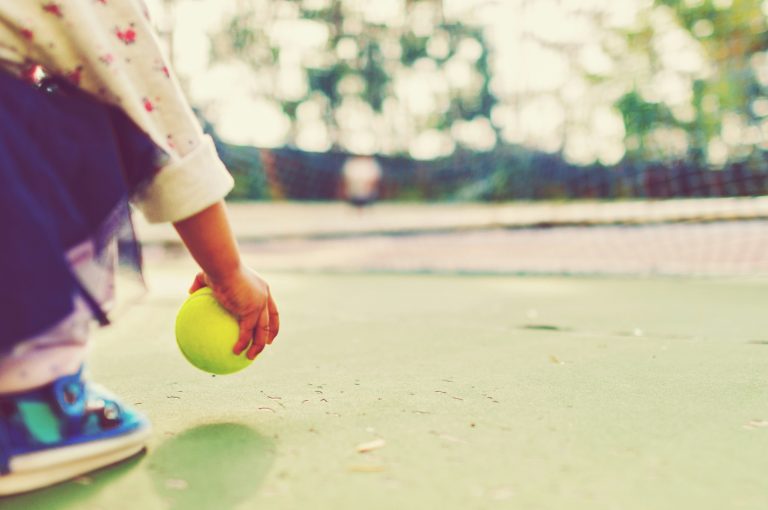
Casual tennis lends itself to cooperative formats. A parent and child can count consecutive hits in a short rally, aim for a cone together, or let the child choose the target. The adult can slow the pace, feed easier balls, or move closer so the child succeeds often.
At the USTA Billie Jean King National Tennis Center, the 10 and under program modifies court length (36 or 60 feet), ball type (red, orange, or green), racquet size, net height, and scoring for young players. Its red ball classes for ages 5 to 8 use 19 to 21 inch racquets. (USTA National Tennis Center program page) These adjustments help tennis fit a child’s size and skill. They are not evidence that tennis improves relationships.
Public courts, a practice wall, or foam balls in a safe open space can reduce costs. For session ideas, see Fun Tennis Drills for Kids Ages 5 to 8.
Ski days can offer shared time, with more planning and risk
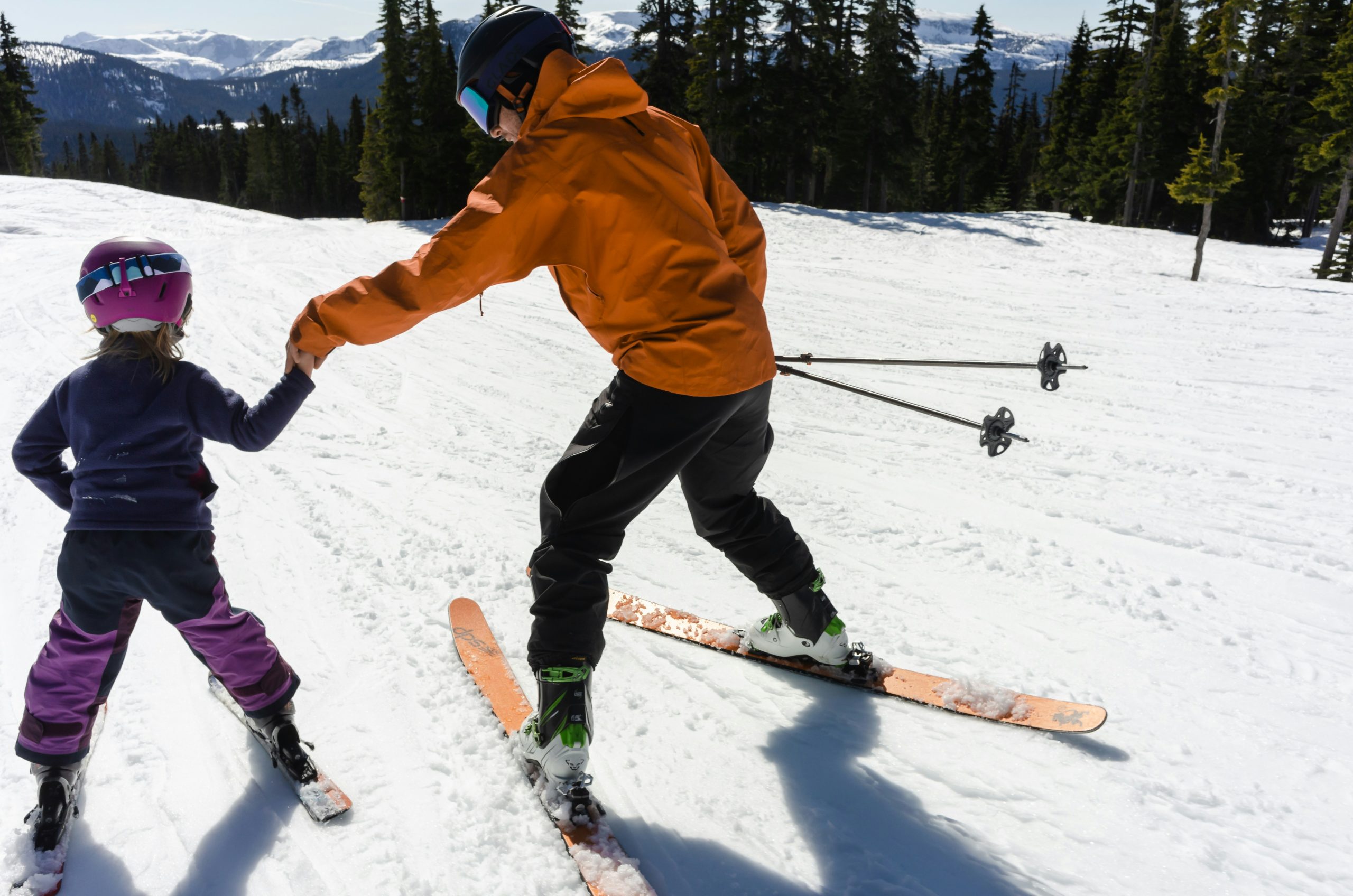
A ski day can offer long stretches together, including chairlift rides and meals. It also carries higher injury risk and more cost. AAP safety guidance for families includes:
- Staying on terrain that matches the child’s skill level, and teaching the child to remove skis and side-step down a slope that is too hard.
- Using a helmet made specifically for skiing, professionally fitted to the child.
- Having bindings properly adjusted by rental or sales professionals.
- Planning snack and water breaks, since fatigue and dehydration can reduce control.
- Never letting children ski alone; younger children need adult supervision.
- Dressing in layers and using sunscreen and goggles, since cold, snow glare, and altitude add their own risks.
Helmets reduce risk but do not prevent all injuries. The CDC states that no helmet is concussion-proof and that helmets need correct fit, certification, and consistent use. (CDC HEADS UP, 2025)
Making the day about more than run counts can protect the shared-time goal. The child can choose a favorite run, set the pace, or decide when to break for lunch.
Frequent low-cost play and occasional trips
No study reviewed here shows that a vacation or an expensive sport is better for closeness than everyday activity. An occasional trip offers novelty and uninterrupted time. Regular short play offers repetition and routine.
Cost, travel, climate, work schedules, and caregiver mobility all shape what is feasible. A walk, a game of catch, dancing in the kitchen, or playground games are equally valid ways to spend time together.
When Sports Create Pressure or Conflict
Shared play can become tense when technique corrections pile up, a child loses repeatedly, or fatigue sets in. Warning signs worth noticing include:
- Repeated reluctance to start
- Fear of making mistakes
- Tension or stomachaches before sessions
- Pressure, from anyone, to win or improve quickly
- Pain during or after play
AAP guidance on organized youth sport emphasizes enjoyment rather than winning as the goal. The lead author of the AAP report summarized it this way: “The interest should start with the child, not the parent.” The AAP also notes that forcing sports participation is not likely to help a child achieve long-term benefits. (AAP, 2019)
AAP guidance for parents advises watching for warning signs of burnout or avoidance. (Stricker, AAP) This guidance comes from organized sport. It does not mean a single argument will harm a family relationship.
Separate disappointment from relationship quality
Losing a game, a bad run, or frustration with a hard skill are normal parts of any sport. AAP guidance encourages parents to redefine success so that performance disappointments are not experienced as personal failures. (Stricker, AAP)
Repair after a difficult session
- Pause the activity rather than pushing through.
- Once everyone is calm, acknowledge the hard moment without blaming anyone.
- When the child is ready, ask what felt hard.
- Let the child help decide whether and how to try again.
Example wording a caregiver could adapt: “That got frustrating. There were too many tips today. Next time, just rallying, or something different?” This is an illustration, not a clinically tested script.
If conflict extends well beyond the activity, or a child seems persistently distressed, a pediatrician or a qualified family or mental health professional can help. Changing the sport alone may not address a broader concern.
Safety, Access, and When to Seek Support
Match any activity to the child’s skill and the conditions, use appropriate equipment, and stop for pain or a suspected injury.
After a bump, blow, or jolt to the head, the AAP advises that anyone with a suspected concussion should not return to play until seen by a doctor. (Schimelpfenig, AAP) The CDC notes that concussion signs may take hours or days to appear and can be harder to spot in young children and some children with disabilities.
Call 911 or go to the nearest emergency department for any of these CDC danger signs after a head injury:
- Seizures or convulsions
- Not recognizing people or places
- Repeated nausea or vomiting
- Unusual behavior, increased confusion, restlessness, or agitation
- Loss of consciousness with increasing drowsiness, or inability to wake up or stay awake
- Slurred speech, weakness, numbness, or decreased coordination
- A headache that gets worse and does not go away
- One pupil larger than the other, or double vision
Choosing a different activity is a reasonable decision when a sport is unwelcome, inaccessible, or repeatedly stressful. When a child’s medical or functional needs affect participation, the AAP suggests a preparticipation evaluation with a pediatrician to discuss options and any adaptive equipment. (AAP, 2023) Adapted activity can widen options, but it is not a treatment for a condition.
Frequently Asked Questions (FAQs)
Sources
- Rhodes, Ryan E., Heather Hollman, and Wuyou Sui. “Family-Based Physical Activity Interventions and Family Functioning: A Systematic Review.” Family Process, 2024, 63(1), 392 to 413 (published online 2023). Systematic review of 20 independent family physical activity interventions of mixed quality, focused on child activity; measured family functioning domains including cohesion. Overall effects on family functioning were mixed; cohesion findings were more promising for children ages 5 to 12. Not specific to tennis, skiing, or informal play. doi:10.1111/famp.12864
- Forghani Soong, Yasmine, Heather Hollman, and Ryan E. Rhodes. “Association Between Child and Youth Physical Activity and Family Functioning: A Systematic Review of Observational Studies.” International Journal of Behavioral Nutrition and Physical Activity, 2025, 22, article 101. Review of 43 observational studies of children (5 to 12) and youth (13 to 17); found small associations, with an indeterminate cohesion association for children. Cannot establish causation. doi:10.1186/s12966-025-01782-z
- Logan, Kelsey, Steven Cuff, and the American Academy of Pediatrics Council on Sports Medicine and Fitness. “Organized Sports for Children, Preadolescents, and Adolescents.” Pediatrics, 2019, 143(6), e20190997; reaffirmed July 2023. Clinical report on organized youth sport, including enjoyment, developmental fit, parent support, and sport dropout. Not a study of informal parent-child play. doi:10.1542/peds.2019-0997
- Stricker, Paul R. “Parenting an Athlete.” HealthyChildren.org, American Academy of Pediatrics, last updated 2019. Parent guidance on support, child preferences, feedback, and burnout warning signs. Official page
- American Academy of Pediatrics. “American Academy of Pediatrics Encourages Organized Sports: For the Fun of It.” HealthyChildren.org, 2019. AAP news summary of the 2019 organized sports clinical report, including the lead author’s statement on child-led interest. Official page
- Schimelpfenig, Samuel S. “Skiing and Snowboarding: Safety on the Bunny Hills and Beyond.” HealthyChildren.org, American Academy of Pediatrics, last updated 2019. Pediatric safety guidance on instruction, terrain, helmets, bindings, supervision, and concussion. Official page
- Centers for Disease Control and Prevention, HEADS UP. “Safety Guidelines: Helmets.” 2025. Official page
- Centers for Disease Control and Prevention, HEADS UP. “Signs and Symptoms of Concussion.” 2025. Official page
- Centers for Disease Control and Prevention. “Child Activity: An Overview.” 2025. Public-health activity recommendations for ages 3 to 5 and 6 to 17. Official page
- Yogman, Michael, et al., American Academy of Pediatrics Committee on Psychosocial Aspects of Child and Family Health and Council on Communications and Media. “The Power of Play: A Pediatric Role in Enhancing Development in Young Children.” Pediatrics, 2018, 142(3), e20182058; reaffirmed January 2025. Clinical report focused on young children and play in general, not on sport. doi:10.1542/peds.2018-2058
- American Academy of Pediatrics. “Physical Activity for Children and Teens with Disabilities: AAP Policy Explained.” HealthyChildren.org, last updated 2023. Official page
- United States Tennis Association, USTA Billie Jean King National Tennis Center. “10 and Under Pathway.” Program description of modified courts, balls, racquets, net height, and scoring for young players; describes sport fit, not psychological outcomes. Official page